Pages

Showing posts with label teaching. Show all posts

Thursday, November 18, 2010

An Unfortunate Impulse...


We were driving up the highway a few days ago when one of the kids asked about sarcasm. I can't remember how the conversation started. Who knows how these things start. The question was put to me. "Dad, what's sarcasm?"
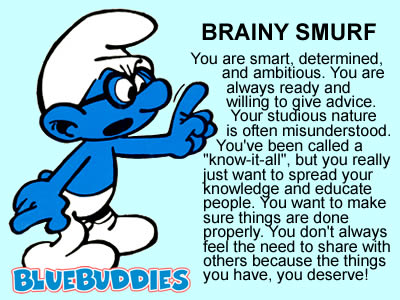
At this point, a wiser man than I would see where this was headed and end things before they got out of hand. Me? I have this delusion that when a child asks a question it is because of a genuine deficiency of knowledge and it is my job to supply it. Oh yes, I think, I can answer that for you my son. Behold, I have the very nugget of understanding you've been seeking. Be comforted by the abundance of my accumulated factoids.
This impulse to awe the masses goes way back. I remember taking rides in the car as a child and trying to bait my sister into asking me questions so I could have the pleasure of answering her.

So, when one of the kids asks a question, there's this impulse that drives me to answer. It's like a force of nature, a pontification instinct. "Sarcasm," I said, "is when you say one thing, but mean another. You use it for emphasis."

Bear in mind, my children are all under ten. According to accepted psychological standards, they are incapable of anything but concrete thought:
"Cognitive development refers to the development of the ability to think and reason. Children (6 to 12 years old) develop the ability to think in concrete ways (concrete operations) such as how to combine (addition), separate (subtract or divide), order (alphabetize and sort), and transform (change things such as 5 pennies = 1 nickel) objects and actions. They are called concrete because they are performed in the presence of the objects and events being thought about."
-- From an article on the Lucile Packard Children's Hopital at Standford
In other words, children under twelve only understand things they can see, touch, hear, taste or feel. They are the ultimate existentialists. This is why they struggle to communicate emotions. They can only explain how being sad or angry makes their body feel. To say one thing and mean another is not difficult to understand, it's impossible.

Children tell lies, but they know they are lying and they mean to convey the exact information they give, even if it is untrue. My children couldn't grasp the idea that you might say a thing that is untrue and mean the thing that is.

So I began to explain. In my defense, my wife helped with this part.

"If I go to the refridgerator and bring mommy back a Diet Pepsi, and she says, 'Thanks, I love Diet Pepsi.' Does she really love Diet Pepsi?" (imagine me investing exaggerated contempt into the phrase)

The children, who know we prefer 'the red can' as they call Coke to all others, answer "No, she doesn't like Diet Pepsi."

"So, why did she say that?"

"Because she doesn't want to hurt your feelings."
"Because she might like it she's never tried it."
"Because it's what you got her and if she doesn't like it she can get her own."

Concrete answers. It never even occurs to them that mommy was insincere in her statement. Never. The rapid fire answers were all based on the firm conclusion that she said exactly what she meant to say.

Just as I'm about to launch into another example and attempt to explain this abstract concept, my wife looks at me. She's out. I can tell by the look in her eyes. She's not going any further with this. Why, I think? We can explain this. We're smart. We can break it down for them.

Then the epiphany strikes me as well.

I am teaching my children to be sarcastic. I have a five-second horror show in my head of the sharp-tongued teenagers these kids will grow up to be. They are quite articulate now. Another five or ten years and straight answers will be a thing of the past. WHAT AM I DOING?!?

"Dad...?" they ask. They are waiting for me to re-engage. I stifle the pontification response. I suppress the teaching reaction.

"Let's talk about something else." Mom quickly supplies a new topic and we're off again, swerving away from the verbal doom I had steered us toward. Maybe I've learned my lesson. Maybe. I'm morbidly curious what it will be like when they do grasp this unattractive concept. They could all become brilliant satirists. More likely they will simply lampoon my every attempt to teach them anything after the age of fourteen.

But hey, that's life for a parent, right?

Saturday, November 13, 2010

Train in Morality


Fathers, do not exasperate your children; instead, bring them up in the training and instruction of the Lord.
--Paul of Tarsus in a letter to the Christian Church at Ephesus

Sometimes as a father I feel the burden to prepare my kids for the ‘real world’. Usually this line of reasoning takes me into some moral gray zone where I start trying to justify lying or fighting or some other such thing. The truth is, God has given us righteousness as a breastplate and faith as shield to protect us from whatever may come at us in the ‘real world’.

If a child is trained from birth to know x, y, and z are wrong and that a, b, and c are right, he will remember these rules all his life. Even when he is of a rebellious age, it will be very clear what he is rebelling against and in what direction he must go to defy these rules.

If, instead, a child is given no guidance, if he is told not to talk about certain things like sin and morality because he may offend some people (usually those people who practice sin and prefer immorality for some reason), if he is taught that a thing is sometimes wrong and sometimes right, he will be lost. He will have no touchstone by which to test his choices.

Such a child is not beyond hope by any means. Every man is born with a conscience. But it is harder to find studs in a wall with a stud finder than it is to mark them while the sheetrock is off and they are plain to see.

What happens when you bring the stud finder to a wall so difficult to penetrate that it becomes unreliable? How then do you choose where to drive the nail? Eventually, things descend into a guessing game where nail after nail is driven until finally something solid is struck. This exercise leaves the laborer exhausted and the wall devastated. How much more do we see exhaustion and devastation as the results of thrashing around in moral ambiguity, trying every likely possibility and retrying when those fail.

Contrast that with the man who knows where to find the studs under the plaster. He knows because the one who built the house has shown him exactly where each one is. Such a man will not, if he is wise, waste energy where there is nothing solid to strike. Again, so it is in life. Unless the Lord builds the house, its builders labor in vain.

We do our children no good service when we fail to mark the boundaries between good and evil. This is the purpose of morality. It is not only to please God, which it does, but to shelter us from the storms of this fallen world. It is to keep us safe, whole and in our right mind until our savior can rescue us.

Father’s do not forget to pass on these lessons along with all the other gifts you give. Do not fail to preserve your own integrity. Keep it. Protect it. It is a sacred trust intended for generations yet unseen. May it pass through our hands unharmed.

Tuesday, September 14, 2010

Rhombus Boy vs. The Irregular Polygon


I have to laugh sometimes when people ask the question. It's almost always in the midst of some social setting that would be perfectly normal for adults, although there are places people aren't used to seeing kids. But, as I mentioned before, I don't really believe in children being held back from learning the ins and outs of the adult world. I don't mean letting kids be exposed to the seedy, disgusting parts of being an adult. I don't really want to be exposed to that.


What I mean is, I think it does a child good to see what he will be doing when he grows up. Weekly shopping, banking, trips to the hardware store, you name it. The whole mundane adult world should be a familiar routine to the growing child. Why let it be a mystery?


Anyway, none of that is really the point. What the comic strip points out is that most of the people we meet have one question on their mind when they find out we homeschool. What about socialization? Presumably what they mean is, will Little Bernard make any friends shut up in the house all day? Some of the places this question is asked are: the Walmart, the library, museums, the laundromat, church, at yard sales, at family reunions or holiday gatherings. Most people that do school at home have a hard time actually staying home. During the school year we are constantly going from one project or activity to another and attending to real life in between. During the summer, when we have no scheduled classes, we are twice as busy. Why? Because for us homeschool is lifeschool.


Ask any tradesman. If you want to learn how to do something, classroom learning won't hurt, but it doesn't even begin to cover it. It's in the actual doing that real learning begins. It's no different for children. If you show them a poster of a butterfly's life-cycle, they will admire the pretty pictures. If you show them a butterfly coming out of it's chrysalis, they will wonder at it and will forever after know where butterflies come from. In the mean time, they will also know where money comes from (Dad's job), food comes from (the grocery store), clean clothes come from (laundry), clean dishes, fixed toys, newspapers, books, and so on. Everything they see every day is real. It is not just a safe, self-contained example, but real life.


The prevailing theory seems to be that children in a tradition school environment will forge long-lasting friendships that will continue and mature as the child grows into an adult. The fear is that homeschooled children will somehow be excluded from that. The truth is, only some of those school kids will have those kinds of friends. Most families move at least once during their children's education. Also, kids in school are under constant pressure to perform both from teachers and peers. This makes it a cut-throat kind of experience for many kids that impedes those friendships. Even so, it's true that most kids do have some friends after school and some of those friendships last.


Now, homeschool kids are usually very close to their siblings and families in general. Yes, that's a little weird, but is it really a bad thing for bothers and sisters to be tight? In addition to that, because of co-op groups and the like, most homeschoolers make friends across age groups as opposed to only being friends with kids their own age. I've seen my own kids playing with 'cool' teenagers and 'baby' three and four-year-olds all in the same day. And since a person wouldn't even consider homeschool if they weren't a get-involved type, these kids have the irreplaceable advantage of parents who are active and interested in their education and their life.


Parents can provide all these benefits and advantages within a traditional education, but will they be there the moment their six-year-old regales a grandmotherly stranger in the laundromat with the Butter Battle Book by Dr. Seuss. At least from where I'm sitting, the kids aren't having any trouble functioning in society. For the record, different isn't always bad. Isn't that what they tried to teach us in school?

Saturday, September 4, 2010

So, who do you call...?

I have this theory. I've discussed it with a few people and I think I have a good point, but not everyone may agree with me. Still, hear me out.

Young children can be trained with the same techniques as dogs.

The best way to train a dog is with positive reinforcement, lots of praise, lots of treats, and above all, clear and simple directions. Dogs respond to consistency and routine. Sound familiar? That's because many child-rearing books teach the same techniques. Young children are concrete thinkers. That means that if a thing does not directly affect them (and probably in a physical way) then it is mostly meaningless to them.


I've read that even the smartest of dogs has the mentality of human toddler. They are pleasers that seek affection and are clever and persistent in the reaching of goals. Likewise, children are scary in their ability to devise plans to get what they want but ultimately they desire to be loved and approved of.

We treat kids to privileges when they behave and enforce punishments when they don't. When they don't understand what's expected of them they get nervous and act out. Changes in routine make them uncertain. The more you think about it t he more you'll see. Maybe a good dog training manual out to sit on the shelf next to Sal Severe and Kevin Leman. I recommend The Loved Dog by Tamar Geller. Part of the book is her personal story and why she likes dogs so much. It might be a really good story. I don't know. I skipped to the training part. Geller believes in non-aggressive training that build dogs up rather than bullying them into behavior. Good for dogs and kids if you ask me.

So, now you just have one question you have to answer. If you think I'm way off base and have no business rearing children with this kind of whacko philosophy, who do you call?

DCFS or PETA?

Thursday, September 2, 2010

I don't get it...

humor - n. wit, a message whose ingenuity or verbal skill or incongruity has the power to evoke laughter

How many psychologists
does it take to change
a light bulb?

One, but it has to really
want to change.


Where, exactly, did this whole sense-of-humor thing come from? Is it something that's absolute or is it strictly objective? It seems to be the latter. At least as far as I can tell with my kids. My wife and I tell jokes and make witty banter throughout the day. (Perhaps we laugh only to keep from crying?) Anyway, the kids have quickly discovered that humor is well received and are constantly trying to participate as well.

Now here's the problem, at least from my perspective. While my own wit goes sailing over their heads like a weather balloon they return fire with a volley of knock-knock jokes that leave me waiting for the punchline. And I look like the goon when I don't laugh at the right time.


Don't get me wrong, I love a good knock-knock joke.
'Knock knock.'
'Who's there?'
'Interrupting cow.'
'Interrupting c-'
'Moo.'
It's funny, right? What I struggle with is jokes with a punchline like 'Flying-chicken vegetable-head.' I know, kids are learning, in this case they are learning the concept of a joke. They grasp the format, but they have a hard time understanding why one thing is funny and not another. We're working on improving the content so we get to more real laughing and less weak 'Ha-ha. That's a good one, son.'

The second issue is the vast chasm that exists between what a kid thinks is funny and what an adult with a more, uh, 'sophisticated' sense of humor thinks is funny. I'm reluctant to use that word, sophisticated, because I know fathers and sons have been sharing the working of Mel Brooks and The Three Stooges for generations now.  All the same, the subtly of satire or parody is lost on children who think in such concrete terms. To be fair, the comedy of bodily functions is mostly lost on me.

Perhaps it's possible to close this gap, to bridge the chasm and find common humor. After all, I'm a huge fan of animated movies including Shrek, Ice Age, Over the Hedge and more. Yet I'm not always sure we're laughing at the same things. I love Donkey's quick and wordy sarcasm while the kids seem to think the gross humor of an Ogre lifestyle is the height of comedy.

Whatever the solution, I encourage everyone to share laughter with your kids, help them learn the joy of finding humor in life's difficult situations. Teach them to look for irony. And for crying out loud, teach them so decent jokes so they don't get that confused deadpan at the jr. talent show.

Monday, July 12, 2010

If knowledge is power...

Why is it that kids (I'm not even talking teenagers) think their friends or cousins know more about everything than I do? I mean, I'm a pseudo-successful adult. I pay my bills, do my job. I read. I know things. But when I talk, I get this glassy-eyed stare that tortured POW's must use to avoid giving information. Or I get random information that has nothing to do with the conversation. (i.e. In a recent conversation about housebreaking the dog, I was informed about the authors of a dog training book the kid had read)

Anyway, my point is that, somehow a nine-year-old has more credibility in matters of life than I do. What's up with that? I've tried explaining that friends don't so much care whether they get someone else in trouble as long as they don't get in trouble themselves. Even after a stint in the corner this message falls on deaf ears. I've tried predicting the consequences for obviously foolish actions. They are still surprised when that tree branch breaks and they spill gracelessly to the earth.

In retrospect, I guess I didn't realize how wise my own parents were until I was an adult looking back. Turns out they were right pretty much all the time. Go figure. So, until my little wild ones grow up and have the benefit of hindsight, I suppose I'll just have to watch and laugh. And occasionally plaster their limbs with band-aids and antibiotic. God bless Neosporin.


By the way, guys, we still do it too. When was the last time your wife warned you something was a bad idea and it turned out she was right? Even though a friend of yours told you it would work. Yeah. I know.

What inspires greatness? I don't know, but these blogs inspire me.